The Full Picture System: Organize Your Parent's Medications When Nobody Else Sees Everything
The Medication Management Kit is a printable medication safety system — tracking worksheets, drug interaction checklists, pharmacy consolidation guides, emergency cards, and doctor conversation scripts — that puts you in control of your aging parent's entire medication picture. Because the cardiologist doesn't know what the GP prescribed. The GP doesn't know about the ibuprofen from the supermarket. And the pharmacy only checks for interactions in its own system. You're the only one who sees everything — and this kit gives you the tools to manage it.
Here's what nobody prepares you for: One day you're a daughter or a son. The next day you're counting pills, calling pharmacies, and Googling whether blood pressure medication mixes safely with the new prescription the specialist just added. You're managing 5 doctors, 3 pharmacies, and 12 prescriptions — and none of them are talking to each other. You're winging it. You know you're winging it. And the stakes couldn't be higher.
Works for families in the US, UK, Canada, Australia, and New Zealand — with country-specific pharmacy, insurance, and medication review guides for each.
Is This For You?
This kit is for you — the adult son or daughter who:
- Found a drawer full of loose pills, expired bottles, and prescriptions from three different pharmacies — and realized nobody is in charge
- Got a call from the ER and couldn't name half of their parent's medications when asked
- Worries about dangerous drug interactions but doesn't know how to check
- Is managing medications across multiple doctors who don't talk to each other
- Has a parent who insists "I'm fine, I don't need help" — while missing doses and doubling up
- Wants a system that works on paper — because apps crash, phones die, and EMTs can't unlock a smartphone
You know something needs to change. The sticky notes aren't working. The pill organizer handles the pills, but not the refills, the side effects, the insurance questions, or the conversation with the doctor who only gives you 15 minutes. You need a system that shows the full picture — not another blank form to fill in.
What's Inside the Medication Management Kit
- Master Medication List — because no single doctor or pharmacy sees everything your parent takes. One page with every medication, supplement, and OTC drug: name, dosage, schedule, prescribing doctor, pharmacy, and purpose in plain English. Print it. Hand it to any doctor, nurse, or EMT who asks. This becomes the "single source of truth" the healthcare system should provide but doesn't.
- Medication Tracking Worksheets — because "Did Mom take her pills this morning?" shouldn't require a phone call. Daily and weekly check-off logs with large-print, high-contrast design your parent can actually read. Print as many copies as you need — no rewriting the same 12 medications every week like you would with a bound journal.
- Drug Interaction Checklist — because the most dangerous combinations are hiding in plain sight, and most families don't know to look. Blood thinners + OTC ibuprofen. Blood pressure meds + potassium supplements. Thyroid medication + calcium. Plus food interactions (grapefruit, leafy greens, St. John's Wort) and the Beers Criteria medications flagged as risky for seniors. Not a substitute for a pharmacist — a checklist so you know what questions to ask.
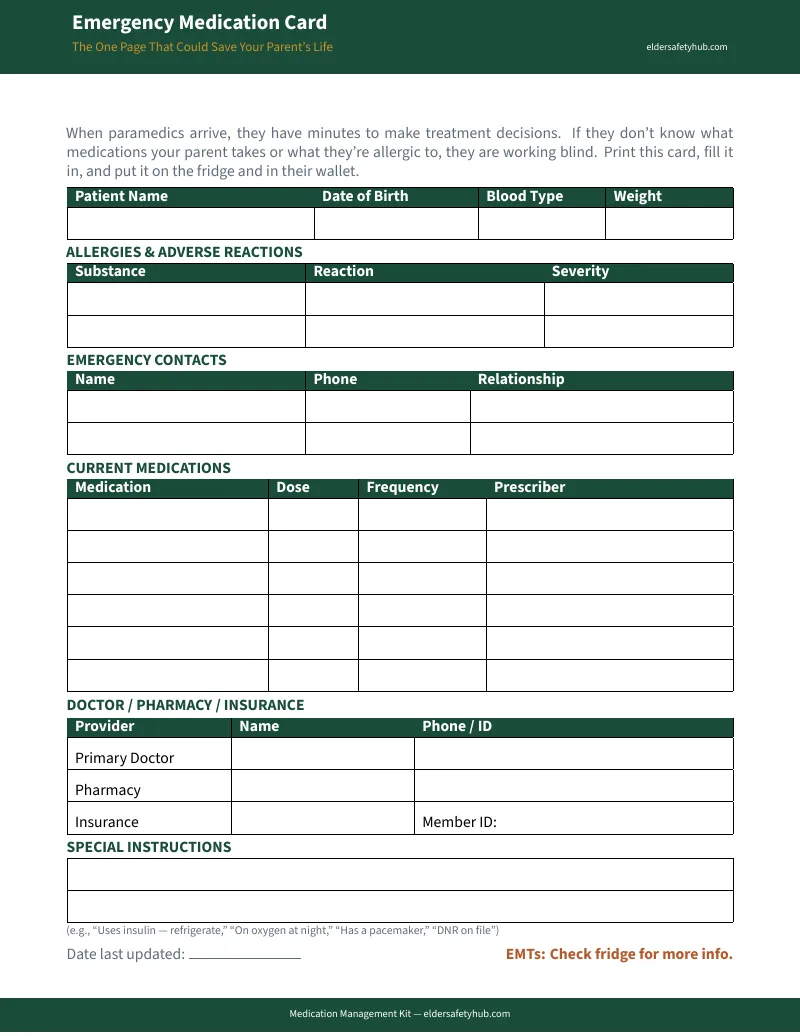
- Emergency Medication Card — because EMTs have 3 minutes, not 30. A wallet-sized card with your parent's name, emergency contacts, allergies, and current medications. Tape one to the fridge. Keep one in their wallet. Give one to each sibling. When the ambulance arrives, this card speaks for your parent when they can't.
- Pharmacy Consolidation Guide — because using three pharmacies means nobody's software catches the interaction. Step-by-step process to transfer all prescriptions to one pharmacy, set up "med sync" so all refills land on the same day, and request blister packing (UK, Canada, Australia). One pharmacy means one pharmacist checking for interactions — and one phone number to call.
- Insurance & Cost Optimization Guide — because most families don't claim savings their parent is entitled to. Medicare Part D's annual cap and Extra Help (US), PBS Safety Net (Australia), provincial drug plans (Canada), free NHS prescriptions (UK) — country-specific guides to stop overpaying.
- Conversation Scripts for Resistant Parents — because the hardest part isn't the pills, it's the parent who says "I'm fine." Word-for-word scripts for "Mom, I need to help organize your medications" — three approaches depending on your parent's personality (The Helper Frame, The Doctor Said Frame, The Tech Upgrade). Plus scripts for when you discover missed doses or double-dosing without triggering shame.
- Doctor Visit Preparation Sheet — because 15-minute appointments only work when you walk in prepared. A pre-appointment questionnaire covering side effects, dosage changes, new symptoms, and deprescribing (reducing unnecessary medications). You'll never walk out thinking "I forgot to ask about..." again.
- Ongoing Monitoring System — because medication management isn't a one-time setup, it's a monthly habit. Monthly audit checklist, signs of adverse drug reactions that get mistaken for "just getting old," Poison Control numbers for all five countries, a technology aids comparison, and the "Go-Bag" emergency kit checklist for power outages and unexpected hospitalizations.
- Country-Specific Resource Guides — because "how do I get a medication review" has a different answer in every country. Pharmacy systems, insurance programs, and medication review services for the US, UK, Canada, Australia, and New Zealand.
After Using This Kit, You'll Be Able To:
- Hand any doctor, nurse, or EMT a single page with your parent's complete medication history — no more fumbling through bottles
- Check for dangerous drug interactions yourself — and know exactly what to ask the pharmacist
- Consolidate prescriptions to one pharmacy so someone is actually watching the full picture
- Share the medication binder with siblings so you're not the only one who "just knows" everything
- Start the medication conversation with a resistant parent — using scripts that don't trigger defensiveness
- Run a monthly medication audit that catches missed doses, expired drugs, and side effects before they become emergencies
- Sleep better knowing there's a system — not just a prayer that nothing goes wrong tonight
Why Not a Free Form, an App, or a Pill Organizer?
Free government forms (the FDA's "My Medicine Record," the AHA's tracking form) give you a blank grid to fill in. They don't tell you which drug combinations are dangerous, how to consolidate pharmacies, or what to say to a doctor who brushes off your concerns in 15 minutes. A blank form is a starting point. This kit is a system.
Etsy templates ($2-$8) are the same blank grids with nicer fonts. They don't include interaction checklists, pharmacy consolidation guides, or conversation scripts for resistant parents. You're paying for formatting — not for the knowledge that prevents errors.
Apps are great for you. But your 80-year-old parent won't use them. EMTs can't access a locked phone. And when the Wi-Fi goes out, the phone dies, or you're not there to check it, the app is useless. Paper on the fridge is the gold standard in emergencies — and it creates a "shared reality" your parent, your siblings, and a visiting nurse can all see without a login.
A pill organizer stores pills. It doesn't track refills, flag interactions, or help you talk to a doctor. It doesn't help when your parent uses three different pharmacies and none of them know about the others. This kit is the operating system that makes the pill organizer work.
Managing Medications Is an Act of Protection
This isn't about controlling your parent. It's about making sure a missed dose doesn't become a hospital visit. It's about catching the drug interaction nobody flags because the cardiologist doesn't know what the GP prescribed. It's about being ready — not scrambling — when the next health crisis hits.
The best time to organize your parent's medications is before the emergency. When you can sit down together, go through the bottles, ask the questions, and build a system that everyone in the family can follow.
— Less Than a Single Pharmacy Co-Pay
Compare it to:
- One ER visit from a preventable drug interaction: $3,000+
- An automatic pill dispenser subscription: $360+/year
- A medication management app premium plan: $60+/year
- The cost of a hospital readmission from a discharge medication error: priceless anxiety
30-day money-back guarantee. If this kit doesn't give you clarity and control over your parent's medications, you pay nothing.
Every day without a system is another day you're guessing — and hoping nothing goes wrong tonight. Get the Medication Management Kit now — have your parent's medications organized by this weekend.